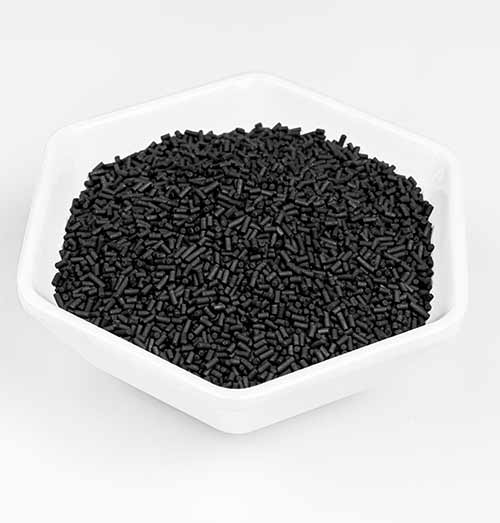
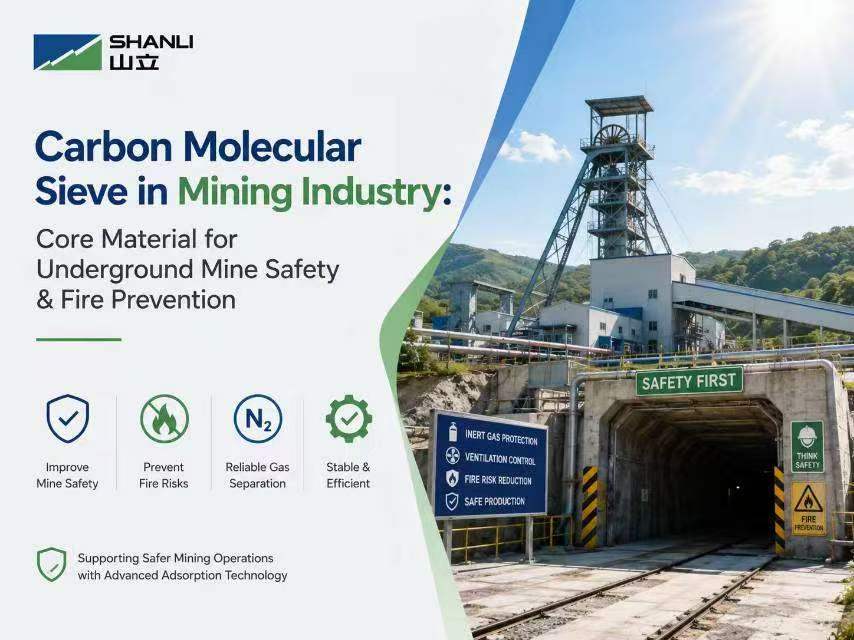
Tamis moléculaire de carbone dans l'industrie minière : matériau essentiel pour la sécurité et la prévention des incendies dans les mines souterraines
Jul 17, 2026
L'exploitation minière souterraine est confrontée à des risques constants pour la sécurité, notamment la combustion spontanée du charbon, l'accumulation de gaz et l'oxydation induite par l'oxygène dans les zones d'exploitation abandonnées et les galeries désaffectées. Ces dangers cachés menacent gravement la sécurité du personnel sur site et la continuité de la production minière. L'inertage à l'azote stable et économique est devenu une mesure technique largement adoptée et très fiable pour la prévention et le contrôle des risques miniers. La production d'azote sur site par PSA a progressivement remplacé l'approvisionnement traditionnel en azote liquide externalisé, devenant ainsi la solution gazeuse dominante pour les mines de charbon et les mines souterraines de métaux. En tant qu'adsorbant fonctionnel principal des générateurs d'azote PSA, de qualité minière Tamis moléculaire de carbone (CMS) détermine la stabilité de la production d'azote, les coûts opérationnels et les effets à long terme sur la protection de la sécurité dans tous les scénarios miniers. 1. Pourquoi l'azote PSA sur site est indispensable à la sécurité minière moderneLes environnements miniers souterrains se caractérisent par des espaces confinés, un air humide, une qualité de l'air fluctuante et des risques dispersés. Contrairement aux scénarios de production industrielle, l'inertage de sécurité dans les mines exige un approvisionnement en azote important, continu et facilement déployable, plutôt qu'un gaz d'ultra-pureté. La présence de traces d'oxygène dans les zones minières fermées est la principale cause des accidents majeurs. 1.1 Prévention des incendies de goaf – Suppression de l’oxydation résiduelle du charbonUne concentration excessive d'oxygène dans les zones d'exploitation abandonnées entraîne une oxydation lente et une combustion spontanée du charbon résiduel, provoquant des incendies souterrains et des fermetures massives de mines. L'injection continue d'azote à haut débit dans les zones exploitées, grâce à un procédé PSA (Project-Secure Air) sur site, dilue la concentration d'oxygène et interrompt le processus d'oxydation du charbon résiduel. Ceci prévient l'apparition et la propagation des feux latents, garantissant ainsi la poursuite de l'exploitation en toute sécurité. 1.2 Suppression des explosions de gaz – Dilution du méthane et des gaz combustiblesL'accumulation de méthane et d'autres gaz combustibles dans les galeries confinées forme des mélanges explosifs lorsque la teneur en oxygène dépasse le seuil de sécurité. L'inertage à l'azote par PSA réduit la concentration d'oxygène dans les espaces clos, déplaçant ainsi les mélanges gazeux combustibles hors de leur zone d'explosivité. Ce procédé élimine les risques d'explosion de gaz lors des opérations de maintenance, de fermeture et de remise en état des galeries, et, en synergie avec les systèmes de drainage des gaz, contribue à renforcer la sécurité souterraine. 1.3 Protection contre la corrosion des équipements et des pipelinesL'oxygène et l'humidité accélèrent conjointement la corrosion des canalisations souterraines, des équipements de ventilation et des installations auxiliaires minières, augmentant ainsi la fréquence de maintenance et les coûts d'exploitation. Le soufflage à l'azote sec élimine l'air humide et oxygéné des espaces clos, ralentissant la corrosion oxydative des composants métalliques, prolongeant la durée de vie des équipements et réduisant les arrêts imprévus dus aux fuites de canalisations et aux pannes d'équipements. 2. Principaux scénarios d'application de l'azote PSA CMS de qualité minièreLes systèmes de génération d'azote PSA basés sur la technologie CMS sont largement déployés dans les stations d'azote fixes au sol et les dispositifs mobiles d'injection d'azote souterrains, assurant la protection de sécurité complète et les fonctions auxiliaires dans les mines souterraines. Leurs principaux cas d'utilisation présentent des caractéristiques propres au secteur minier, avec des conditions de fonctionnement sensiblement différentes de celles des applications pétrochimiques et semi-conductrices. 2.1 Prévention de l'inertage des zones d'exploitation et de la combustion spontanéeIl s'agit de l'application la plus importante et la plus cruciale de l'azote CMS PSA dans l'industrie minière. L'injection continue d'azote dans les zones exploitées réduit la concentration interne d'oxygène, freine l'oxydation et l'échauffement du charbon résiduel et prévient efficacement la combustion spontanée des veines de charbon. Dans les zones exploitées présentant des foyers d'incendie cachés, l'injection massive d'azote permet de diluer rapidement l'oxygène, d'étouffer les feux latents et d'éviter les reprises de feu, garantissant ainsi une exploitation durable des fronts de taille. 2.2 Dilution des gaz souterrains et suppression des explosionsAprès la fermeture des galeries et l'abandon du front de taille, de l'azote est injecté en continu pour remplacer l'air et diluer le méthane et les gaz combustibles accumulés. Ce procédé réduit la concentration volumique des mélanges gazeux explosifs, abaisse la limite d'explosivité et élimine les risques d'explosion de gaz lors des opérations de maintenance et de remise en service de la mine. Il est associé aux systèmes de drainage des gaz pour renforcer la sécurité en milieu souterrain. 2.3 Purge de l'entretien des pipelines et des équipementsAvant les travaux à chaud souterrains, la révision des pipelines et la mise en service des équipements, l'azote PSA est utilisé pour purger et remplacer complètement les gaz combustibles résiduels dans les pipelines et les espaces confinés. Il réduit efficacement les risques de combustion et d'explosion associés aux opérations à chaud, offrant des conditions d'exploitation plus sûres pour la construction et la maintenance souterraines. 2.4 Protections de sécurité auxiliaires pour les mines métalliquesPour les mines souterraines métalliques et non métalliques sujettes à l'oxydation des sulfures et à la combustion spontanée, les systèmes d'azote CMS PSA assurent une protection sous atmosphère inerte des zones d'exploitation abandonnées et des galeries fermées. Ils limitent la dégradation oxydative des gisements et préviennent l'accumulation de chaleur et les risques d'incendie souterrain, garantissant ainsi une sécurité adaptée à de nombreux types d'exploitation minière. 3. Avantages uniques des systèmes de gestion de la chaîne (CMS) spécifiques au secteur minier pour les conditions de travail minières complexesLes environnements d'exploitation minière sont bien plus difficiles que les environnements industriels classiques : sources d'air comprimé instables, forte humidité, traces d'impuretés d'huile et arrêts/démarrages fréquents des équipements. Les systèmes de broyage industriels ordinaires sont sujets à une dégradation rapide de leurs performances et à une pulvérisation excessive en milieu minier, tandis que les systèmes de broyage adaptés aux conditions minières présentent des avantages adaptatifs uniques. 3.1 Forte adaptabilité à l'humidité et aux impuretésGrâce à un prétraitement de l'air comprimé adapté (incluant séchage, élimination des huiles et filtration des poussières), le CMS de qualité minière bénéficie d'une modification spécifique de sa structure poreuse. Ce prétraitement permet de retarder significativement la dégradation des performances due à l'obstruction des pores causée par l'humidité et les traces d'impuretés d'huile ou de gaz, offrant ainsi une résistance supérieure à l'humidité et à la contamination par rapport au CMS ordinaire soumis à des conditions de prétraitement de l'air imparfaites. 3.2 Résistance mécanique ultra-élevée et performances anti-pulvérisationL'injection souterraine d'azote mobile et les impacts fréquents des flux de gaz entraînent un frottement et une extrusion continus des adsorbants. Le CMS, matériau spécifique au secteur minier, présente une résistance à la compression élevée et un faible taux d'usure. Il contrôle efficacement le taux de pulvérisation et réduit considérablement la production de poussières de carbone, diminuant ainsi significativement les risques d'obstruction des canalisations, d'augmentation des pertes de charge dans le circuit de gaz et de pollution souterraine secondaire due à la pulvérisation de l'adsorbant, et par conséquent les coûts de maintenance des équipements. 3.3 Adaptable au fonctionnement intermittent et à l'arrêt-démarrage d'urgenceContrairement aux équipements de semi-conducteurs et de pétrochimie qui fonctionnent en continu 24 heures sur 24, les systèmes d'azote utilisés dans les mines nécessitent souvent un fonctionnement en veille et un démarrage rapide en cas d'urgence, notamment pour la prévention des incendies et les interventions d'urgence. Les systèmes CMS de qualité minière permettent de rétablir rapidement des performances stables d'adsorption-désorption, même en cas d'arrêts et de démarrages fréquents, avec des fluctuations de pureté maintenues dans des limites acceptables, garantissant ainsi un approvisionnement fiable en azote pour la gestion des situations d'urgence. 3.4 Excellente performance en termes de coûts sur l'ensemble du cycle de vieLa production d'azote sur site par PSA permet de s'affranchir des contraintes liées au transport d'azote liquide sur de longues distances et à la dépendance aux réservoirs de stockage haute pression, offrant ainsi des avantages économiques considérables pour l'inertage continu. Parallèlement, l'azote liquide demeure une solution efficace pour les interventions d'urgence et l'alimentation instantanée en gaz à haut débit. Ces deux éléments peuvent être utilisés de manière complémentaire au sein des systèmes de sécurité minière. Tout en répondant aux besoins importants d'inertage, les systèmes PSA réduisent efficacement les coûts d'approvisionnement et de transport du gaz à long terme. Grâce à leurs performances stables et à leur longue durée de vie dans des conditions d'air comprimé standard, ils minimisent les pertes dues aux arrêts de production liés au remplacement fréquent de l'adsorbant. 4. Impacts négatifs des systèmes de gestion de la chaîne (SGC) de faible qualité sur la sécurité et la production minièresLa sécurité minière impose des exigences strictes en matière de stabilité de l'azote, et les performances des systèmes de séparation de l'azote (SSN) déterminent directement l'efficacité de la prévention et du contrôle des risques souterrains. Un SSN générique de qualité inférieure peut engendrer de multiples risques pour la sécurité et des pertes économiques. Un SSN de mauvaise qualité présente une faible sélectivité de séparation oxygène-azote, ce qui entraîne une pureté d'azote insuffisante et un rendement instable. L'inertage insuffisant des remblais miniers ne permet pas de freiner efficacement l'oxydation du charbon, ce qui favorise l'apparition de foyers d'incendie cachés et d'accidents de combustion spontanée. Par ailleurs, leur faible résistance mécanique entraîne une pulvérisation importante lors de l'exploitation, obstruant les canalisations d'injection d'azote et réduisant d'autant l'efficacité de l'injection d'azote à grande échelle pour la prévention des risques. De plus, les adsorbants de qualité inférieure présentent une faible résistance à l'humidité et aux impuretés, et leurs performances se dégradent rapidement dans les environnements miniers complexes. Les arrêts fréquents des équipements et les remplacements d'adsorbants perturbent les calendriers d'exploitation normaux, réduisent la productivité et entraînent des coûts d'exploitation et de maintenance plus élevés à long terme pour les entreprises minières. 5. Critères de sélection d'un CMS professionnel pour l'industrie minièreLors de l'achat de systèmes de gestion de la qualité (CMS) pour les générateurs d'azote destinés aux systèmes PSA miniers, les entreprises doivent privilégier les indicateurs de performance adaptés au secteur et éviter d'adopter de manière irrationnelle des normes de sélection d'ultra-haute pureté de qualité semi-conducteur sans tenir compte des conditions d'exploitation réelles. Si des scénarios spécifiques exigent effectivement une pureté supérieure (comme la purge spéciale des canalisations ou l'inertage de minéraux à haute activité), une évaluation complète intégrant des procédés de purification en plusieurs étapes doit être menée. Tout d'abord, il faut respecter les exigences de pureté de l'azote en fonction des conditions de travail dans la mine. Dans la plupart des scénarios de prévention des incendies et d'inertage, l'obtention stable d'une pureté de 97 % à 98 % avec un débit continu important est la principale considération ; pour des besoins de remplacement spécifiques, des niveaux de pureté plus élevés peuvent être sélectionnés au besoin. Deuxièmement, privilégiez les indicateurs clés tels que la résistance à la compression de l'adsorbant, la résistance à l'usure et la performance anti-pulvérisation pour vous adapter aux impacts fréquents et aux arrêts fréquents en milieu souterrain. Troisièmement, inspectez la résistance à l'humidité et la capacité d'impuretés du CMS afin de garantir un fonctionnement stable à long terme malgré les conditions instables de l'air ambiant en milieu minier. Quatrièmement, vérifiez la durée de vie et le taux d'atténuation des performances à long terme afin de réduire les remplacements fréquents et les pertes liées aux arrêts de production. Enfin, sélectionnez un CMS spécial certifié pour le secteur minier et compatible avec les équipements d'azote PSA industriels à grand débit afin de garantir la sécurité et la stabilité d'exploitation. 6. ConclusionLa protection par inertage à très faible teneur en oxygène est essentielle à la sécurité de la production dans les mines souterraines modernes. En tant qu'adsorbant principal des systèmes de génération d'azote PSA sur site, le CMS de qualité minière assure un approvisionnement en azote stable, à haut débit et économique pour la prévention des incendies de remblai, la suppression des explosions de gaz et la maintenance des équipements souterrains, résolvant ainsi les problèmes liés au coût élevé et aux délais d'approvisionnement trop longs des systèmes traditionnels d'azote liquide. Contrairement aux systèmes de stockage d'air comprimé (SSC) destinés aux semi-conducteurs de très haute pureté et aux SSC pétrochimiques axés sur une stabilité équilibrée, les SSC spécifiques au secteur minier tirent leurs principaux atouts d'une grande adaptabilité aux environnements complexes, d'une résistance à la pulvérisation et d'une efficacité de fonctionnement à haut débit. Grâce à un prétraitement de l'air adapté et à une maintenance régulière, ils peuvent s'adapter durablement à l'humidité élevée des milieux souterrains, aux conditions de travail variables et aux arrêts/démarrages fréquents, contribuant ainsi à réduire les risques pour la sécurité et les coûts d'exploitation globaux des mines. Le choix d'un tamis moléculaire de carbone haute performance de qualité minière adapté aux conditions de travail sur site est une mesure clé pour les entreprises minières afin de stabiliser la sécurité de la production, de réduire les coûts de maintenance et de réaliser une prévention et un contrôle des risques efficaces et intelligents.


 RÉSEAU PRIS EN CHARGE